If you’ve ever received a text saying “IMY” and wondered what it means, you’re not alone. Digital communication moves quickly, and short expressions often appear without explanation. Among the most common messaging abbreviations is IMY, a simple phrase that carries a surprisingly strong emotional message.
People search for “IMY meaning in chat” because they want to understand whether it’s friendly, romantic, serious, or casual. The meaning can vary depending on who sends it and the situation surrounding the conversation.
Understanding IMY helps avoid misunderstandings and allows you to respond naturally in chats, texts, and social media conversations. While the abbreviation is short, the feelings behind it can be meaningful.
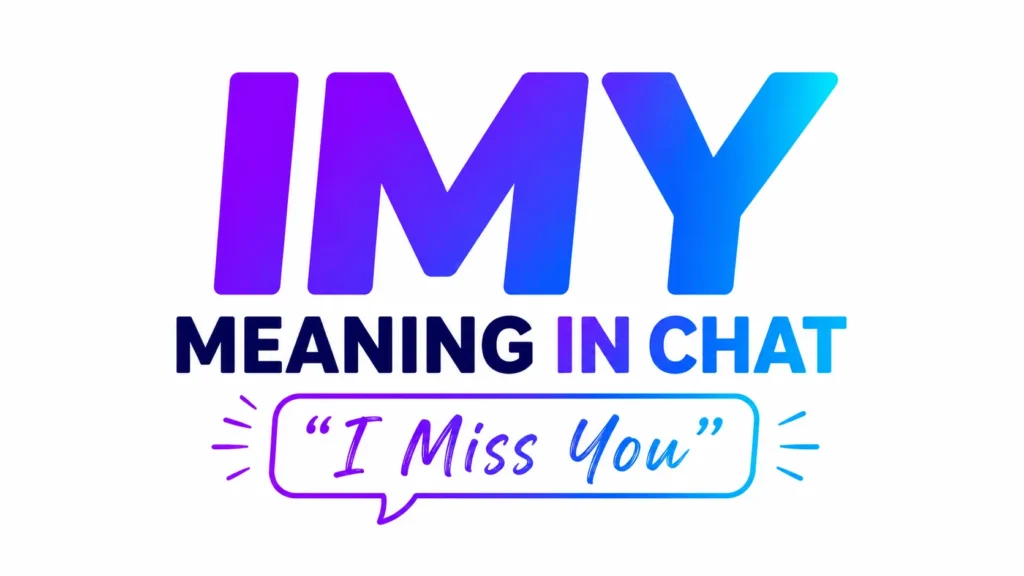
IMY Meaning in Chat – Quick Meaning
IMY stands for:
“I Miss You”
It is commonly used in:
- Text messages
- WhatsApp chats
- Instagram DMs
- Snapchat conversations
- Online gaming chats
- Social media comments
People use IMY when they want to express that they miss someone’s presence, company, attention, or friendship.
Examples
“IMY. We haven’t talked all week.”
“Just saw our old photos. IMY.”
“IMY already and you’ve only been gone a day.”
The phrase can be romantic, friendly, emotional, or even playful depending on the relationship between the people involved.
Origin & Background
The abbreviation IMY emerged during the rise of text messaging in the late 1990s and early 2000s. Early mobile phones limited message length, encouraging users to shorten common phrases.
As internet chat rooms, instant messengers, and SMS texting became popular, abbreviations such as LOL, BRB, IDK, and IMY entered everyday communication.
Social media accelerated its popularity. Platforms like Instagram, Snapchat, TikTok, and X helped spread internet slang across cultures and age groups.
Over time, IMY evolved beyond simple texting. Today, it often serves as a quick emotional check-in. Instead of writing a long message, people can send three letters and instantly communicate affection, nostalgia, or emotional connection.
The phrase has become part of modern digital culture because it balances emotional expression with convenience.
Real-Life Conversations
WhatsApp Conversation
Andrew:
Hey, how’s the trip going?
David:
Pretty good, but honestly IMY.
Andrew:
That’s sweet. We’ll hang out when you’re back.
David:
First thing on my list.
Instagram DM
Sophia:
Just saw your graduation pictures!
Emma:
Thank you! It feels unreal.
Sophia:
IMY. We need a catch-up call soon.
Emma:
Absolutely. It’s been way too long.
TikTok Comments
Ryan:
Remember when everyone did this trend in 2022?
Jason:
Those were fun times.
Ryan:
IMY guys. The group isn’t active anymore.
Jason:
We should bring everyone back together.
Text Message
Mia:
The city feels different without you here.
Noah:
Really?
Mia:
Yeah. IMY.
Noah:
I miss you too.
Emotional & Psychological Meaning
Although IMY is short, it often carries emotional weight.
At its core, the phrase expresses:
- Affection
- Longing
- Nostalgia
- Connection
- Appreciation
Humans naturally seek social bonds. When someone says IMY, they are acknowledging that another person’s presence matters to them.
In many cases, the phrase serves as reassurance. It reminds the receiver that they are remembered and valued even when distance separates them.
Consider a simple scenario. Imagine moving to another city for work. During the first few weeks, a close friend texts, “IMY.” The message may only contain three letters, yet it creates warmth and comfort because it confirms the friendship remains important.
This emotional impact explains why the abbreviation continues to thrive despite changing communication trends.
Usage in Different Contexts
Social Media
People frequently use IMY in comments, captions, stories, and direct messages.
Examples include:
- Missing old friends
- Remembering past experiences
- Expressing support during separation
Friends and Relationships
Among friends, IMY often communicates genuine affection.
For romantic partners, it can signal emotional closeness and longing.
Context usually determines whether the message is platonic or romantic.
Work and Professional Settings
Professional environments rarely use IMY.
It may occasionally appear between close colleagues who have developed strong friendships outside work.
Formal communication generally favors complete sentences instead.
Casual vs Serious Tone
Casually:
“IMY lol”
Serious:
“IMY. Things haven’t been the same without you.”
The same abbreviation can communicate very different emotional levels depending on surrounding words and circumstances.
When NOT to Use It
While IMY is widely accepted, there are situations where it may not be appropriate.
Formal Business Communication
Avoid using IMY in:
- Client emails
- Job applications
- Professional reports
- Official workplace communication
New Relationships
Using IMY too early may create confusion if emotional expectations have not been established.
Sensitive Situations
Some people may interpret IMY as romantic interest even when that was not intended.
Cultural Differences
Not every culture expresses emotions openly. In certain contexts, the phrase may feel unusually personal.
Consider the relationship before sending it.
Common Misunderstandings
Several misconceptions surround IMY.
Assuming It Is Always Romantic
Many people use IMY with friends, siblings, parents, and classmates.
Romance is only one possible interpretation.
Believing It Indicates Deep Feelings
Sometimes it simply means someone noticed your absence.
The phrase does not automatically suggest strong emotional attachment.
Misreading Tone
Text lacks facial expressions and voice cues.
A playful IMY can sometimes appear serious.
Taking It Literally
A person can say IMY after only a few hours apart as a humorous or affectionate gesture.
Context matters more than the exact amount of time.
Comparison Table
| Expression | Meaning | Tone | Common Usage |
|---|---|---|---|
| IMY | I Miss You | Affectionate | Friends, family, partners |
| ILY | I Love You | Deeply emotional | Close relationships |
| Miss Ya | I Miss You | Casual | Friends |
| Thinking of You | You are on my mind | Warm | Personal and supportive |
| WYD | What Are You Doing? | Neutral | Conversation starter |
| IDC | I Don’t Care | Dismissive | Informal chats |
| Can’t Wait to See You | Looking forward to meeting | Positive | Friends and partners |
| Glad You’re Here | Opposite sentiment | Appreciative | Present moment |
Key Insight
IMY occupies a unique space between friendship and affection. It is stronger than a casual greeting but usually less intense than a declaration of love.
Variations and Types
1. IMYSM
Meaning: I Miss You So Much
Used when emotions feel stronger than a simple IMY.
2. IMYM
Meaning: I Miss You More
A playful response.
3. IMYT
Meaning: I Miss You Too
A direct reply.
4. Miss Ya
A relaxed version of the same sentiment.
5. Missing You
Slightly more expressive and personal.
6. Wish You Were Here
Highlights physical absence.
7. Thinking About You
Focuses on remembrance rather than longing.
8. Come Back Soon
Adds a desire for reunion.
9. Long Time No See
Friendly expression emphasizing separation.
10. Can’t Wait to See You
Looks forward to reconnecting.
How to Respond When Someone Uses It
Casual Replies
- IMY too.
- Same here.
- Miss you as well.
- We need to catch up soon.
Funny Replies
- I’ve been waiting for you to admit it.
- Finally, someone appreciates me.
- I knew you’d miss me.
- My fan club grows every day.
Mature Replies
- I appreciate that. I’ve been thinking about you too.
- Thank you. I miss our conversations.
- That means a lot to hear.
Respectful Replies
- Hope you’re doing well too.
- Thank you for reaching out.
- Looking forward to seeing you again.
- Wishing you the best until we meet.
Regional & Cultural Usage
Western Culture
IMY is commonly used among friends, family members, and romantic partners.
Emotional openness is generally accepted in many Western societies.
Asian Culture
Usage varies by country and generation.
Some individuals prefer indirect emotional expression, making IMY feel more significant when used.
Middle Eastern Culture
The phrase may carry strong warmth and respect among close family members and trusted friends.
Relationship context remains important.
Global Internet Usage
Online communities have made IMY universally recognizable.
People from different countries often understand the abbreviation even when English is not their first language.
Gen Z vs Millennials
Gen Z
- Uses IMY frequently
- Often combines it with emojis
- Sometimes uses it humorously
Millennials
- Tend to use it more sincerely
- Often reserve it for meaningful connections
- May prefer full phrases in important conversations
Is It Safe for Kids?
Yes, IMY is generally considered safe for children.
The abbreviation simply means “I Miss You” and does not contain offensive language.
Parents should still encourage children to understand who they are communicating with online and to practice safe digital communication habits.
FAQs
What does IMY mean in texting?
IMY stands for “I Miss You.”
Is IMY romantic?
Not always. Friends and family members use it regularly.
How do you reply to IMY?
Simple responses include “IMY too” or “I miss you as well.”
Is IMY a positive message?
Yes. It usually communicates affection, appreciation, or emotional connection.
What is the difference between IMY and ILY?
IMY means “I Miss You,” while ILY means “I Love You.”
Can IMY be used with friends?
Absolutely. Many people use it in close friendships.
Why do people say IMY?
They want to express that someone’s absence has been noticed and felt.
Conclusion
Understanding the IMY meaning in chat is about more than decoding an abbreviation. It is about recognizing a small expression that carries genuine human emotion. Whether it appears in a text message, a social media comment, or a private conversation, IMY communicates connection, affection, and remembrance.
Its popularity reflects how modern communication balances speed with emotional expression. Three simple letters can remind someone that they matter, even across long distances.
When used thoughtfully, IMY helps strengthen relationships, maintain friendships, and create moments of warmth in everyday conversations. Knowing its meaning allows you to respond naturally and use it confidently whenever the situation feels right.