If you’ve spent time online, you’ve probably come across the term ROFL in chats, comments, text messages, or social media conversations. It often appears when someone finds something extremely funny, yet many people are unsure about its exact meaning or how it differs from similar internet expressions.
The meaning of ROFL in chat is simple on the surface, though its cultural significance goes much deeper. As online communication has evolved, abbreviations like ROFL have become shortcuts for expressing emotions quickly and effectively.
Many users search for this term after receiving it in a message, seeing it in a comment section, or noticing younger internet users include it in conversations. Understanding its meaning helps decode digital communication and prevents misunderstandings.
This guide explores what ROFL means, where it came from, how people use it today, and why it remains one of the internet’s most recognizable expressions of laughter.
Meaning of ROFL in Chat – Quick Meaning
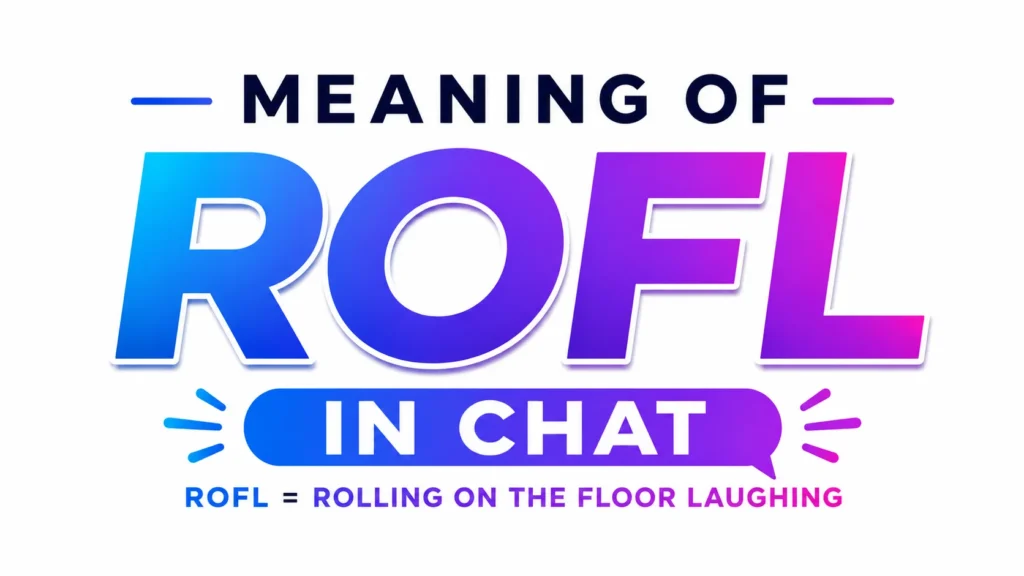
ROFL stands for:
Rolling On the Floor Laughing
It is used to show that something is extremely funny.
People type ROFL when regular laughter expressions like “haha” or “lol” do not feel strong enough.
Quick Definition
- Expresses intense amusement.
- Indicates uncontrollable laughter.
- Common in texting and social media.
- Usually used in casual conversations.
Examples
“That video had me ROFL.”
“I can’t stop laughing, ROFL!”
“Your comment is ROFL-worthy.”
In most situations, ROFL simply means that someone finds something hilarious.
Origin & Background
ROFL emerged during the early days of internet communication.
Long before smartphones and modern social media platforms existed, people communicated through online forums, chat rooms, and messaging services. Since typing lengthy reactions took time, users began creating abbreviations for common expressions.
ROFL became one of the earliest and most popular internet acronyms.
Its popularity grew throughout the late 1990s and early 2000s when online chatting became a daily activity for millions of people.
The phrase painted a vivid image. Nobody literally rolled on the floor every time they laughed. The expression exaggerated the reaction to emphasize just how funny something seemed.
As texting and social media expanded, ROFL traveled across platforms including:
- Online forums
- Instant messaging services
- TikTok
- Gaming communities
Although newer slang terms continue to appear, ROFL remains widely recognized across generations.
Real-Life Conversations
WhatsApp Conversation
Andrew: I accidentally joined the meeting with a dog filter on.
David: Please tell me you’re joking.
Andrew: The entire team saw it.
David: ROFL, that’s unforgettable.
Instagram DM
Sophia: Did you watch my latest reel?
Emma: Yes.
Emma: ROFL at the ending.
Sophia: That reaction makes me happy.
TikTok Comments
Andrew: This might be the funniest video today.
David: Might be?
Andrew: Okay, definitely.
David: ROFL. I watched it three times.
Text Message
Jessica: My little brother tried teaching the cat to sit.
Rachel: Did it work?
Jessica: The cat walked away.
Rachel: ROFL. That sounds exactly like a cat.
Emotional & Psychological Meaning
ROFL communicates more than laughter.
It signals shared enjoyment and emotional connection.
When people laugh together, even through a screen, they create a sense of closeness. Digital communication lacks many nonverbal cues, so expressions like ROFL help fill that gap.
The acronym can convey:
- Joy
- Entertainment
- Surprise
- Playfulness
- Social bonding
Many users choose ROFL because it feels more expressive than a simple “lol.”
Imagine sending a funny story to a friend after a stressful day. Their response is “ROFL.” Instantly, you know the joke landed exactly as intended. That small exchange creates a positive emotional moment despite physical distance.
This illustrates why internet slang remains powerful. It helps people share feelings quickly while maintaining connection.
Usage in Different Contexts
Social Media
ROFL frequently appears in:
- Comment sections
- Meme pages
- Viral videos
- Funny posts
- Livestream chats
It acts as a public reaction to entertaining content.
Friends and Relationships
Friends often use ROFL to show genuine amusement.
It helps keep conversations energetic and playful.
Among close friends, it may appear several times during a humorous exchange.
Work and Professional Settings
Professional communication usually requires caution.
While ROFL may occasionally appear in relaxed workplace chats, it is generally better to use clear language in formal emails and business discussions.
Casual vs Serious Tone
Casual Use
- Friendly
- Humorous
- Relaxed
- Informal
Serious Use
- Rarely appropriate
- Can weaken professional credibility
- May distract from important discussions
ROFL works best when the atmosphere is lighthearted.
When NOT to Use It
Certain situations call for more thoughtful responses.
Serious Discussions
Avoid using ROFL during conversations involving:
- Personal loss
- Health concerns
- Emotional struggles
- Sensitive family matters
Professional Documents
Business reports and formal correspondence are not suitable places for internet slang.
Cultural Contexts
Not everyone understands internet abbreviations.
Using ROFL with unfamiliar audiences may create confusion.
Misinterpreted Humor
If sarcasm is involved, ROFL could accidentally appear dismissive or insensitive.
Context always matters.
Common Misunderstandings
Taking It Literally
Most users do not actually roll on the floor laughing.
The phrase exaggerates laughter for effect.
Assuming It Means the Same as LOL
ROFL usually suggests a stronger reaction.
LOL often indicates mild amusement.
Thinking It Is Outdated
Some people believe ROFL disappeared years ago.
It remains recognizable and widely understood.
Misreading the Tone
ROFL is generally positive.
The meaning can shift if used sarcastically, though that depends on context.
Comparison Table
| Expression | Meaning | Intensity | Typical Use |
|---|---|---|---|
| ROFL | Rolling On the Floor Laughing | Very High | Extremely funny situations |
| LOL | Laughing Out Loud | Moderate | Everyday humor |
| LMAO | Laughing My Off | High | Strong amusement |
| Haha | Basic laughter | Low to Moderate | Casual conversations |
| LMFAO | Intense laughter | Very High | Humor and entertainment |
| Hehe | Light giggle | Low | Playful interactions |
| Facepalm | Embarrassment | Opposite Reaction | Mistakes and awkward moments |
Key Insight
ROFL stands out because it combines humor with exaggeration. The phrase creates a visual image that makes the reaction feel stronger than ordinary laughter.
Variations and Types
1. ROFLMAO
Rolling on the floor laughing even harder.
2. ROFLLOL
Combines ROFL with LOL for emphasis.
3. ROFL 😂
Adds emojis to strengthen the reaction.
4. ROFL Fr
Means the laughter is genuine.
5. ROFL OMG
Expresses surprise and amusement together.
6. ROFL Haha
Adds extra laughter for emphasis.
7. ROFL Literally
Used when something feels exceptionally funny.
8. ROFL Dead
Suggests the joke was overwhelmingly funny.
9. ROFL Stop
Means the person cannot stop laughing.
10. ROFL Again
Used when revisiting a joke that remains funny.
How to Respond When Someone Uses It
Casual Replies
- “Glad you liked it.”
- “I knew you’d laugh.”
- “That made my day.”
- “Happy you enjoyed it.”
Funny Replies
- “Please stay off the floor.”
- “I’ll send a cushion.”
- “Mission accomplished.”
- “My comedy career starts today.”
Mature Replies
- “I’m glad it brought some joy.”
- “Happy it made you smile.”
- “That’s wonderful to hear.”
Respectful Replies
- “Thank you for the kind reaction.”
- “I appreciate that.”
- “Glad you found it entertaining.”
Regional & Cultural Usage
Western Culture
ROFL is highly recognizable across English-speaking countries.
Many internet users grew up seeing it in online chats.
Asian Culture
The term is understood among English-speaking users, though local expressions often dominate daily communication.
Middle Eastern Culture
ROFL appears frequently in international online communities and gaming spaces where English is commonly used.
Global Internet Usage
Internet culture allows slang to spread rapidly across borders.
ROFL remains one of the most universally recognized laughter acronyms.
Gen Z vs Millennials
Gen Z
- Often combines ROFL with emojis.
- Uses a wider range of newer slang.
- May switch between multiple laughter expressions.
Millennials
- Grew up during ROFL’s peak popularity.
- Frequently recognize and understand it.
- Often use it nostalgically.
Is It Safe for Kids?
Yes, in most situations.
ROFL is generally a harmless abbreviation used to express laughter. Parents should still encourage children to understand online context and communicate respectfully, though the term itself is considered family-friendly.
FAQs
What does ROFL mean in chat?
ROFL stands for “Rolling On the Floor Laughing” and expresses strong amusement.
Is ROFL stronger than LOL?
Yes. ROFL usually indicates more intense laughter than LOL.
Do people still use ROFL?
Yes. While newer slang exists, ROFL remains widely recognized online.
Is ROFL appropriate for work?
Usually not in formal communication. Casual workplace chats may be different.
Can ROFL be sarcastic?
It can be, though most uses are sincere.
Is ROFL suitable for social media?
Absolutely. It frequently appears in comments, captions, and messages.
What is the difference between ROFL and LMAO?
Both express strong laughter, though personal preference often determines which one people use.
Conclusion
Understanding the meaning of ROFL in chat helps make modern digital conversations easier to navigate. The acronym stands for “Rolling On the Floor Laughing” and serves as a playful way to express intense amusement.
Its longevity reflects the lasting influence of internet culture. Many online expressions come and go, yet ROFL continues to be recognized by users across generations and platforms.
Whether you encounter it in a text message, social media comment, or group chat, the message is usually straightforward: something was genuinely funny. Knowing how it works allows you to respond naturally and participate more confidently in online communication.