If you’ve been scrolling through Snapchat, Instagram, or WhatsApp chats, you may have come across the term “fss” and paused for a second. It looks short, almost random, yet it appears in conversations where people agree, react, or emphasize something strongly.
The confusion is normal. Social media language evolves fast, and abbreviations like this often don’t come with explanations. People search for it because context alone doesn’t always make the meaning obvious.
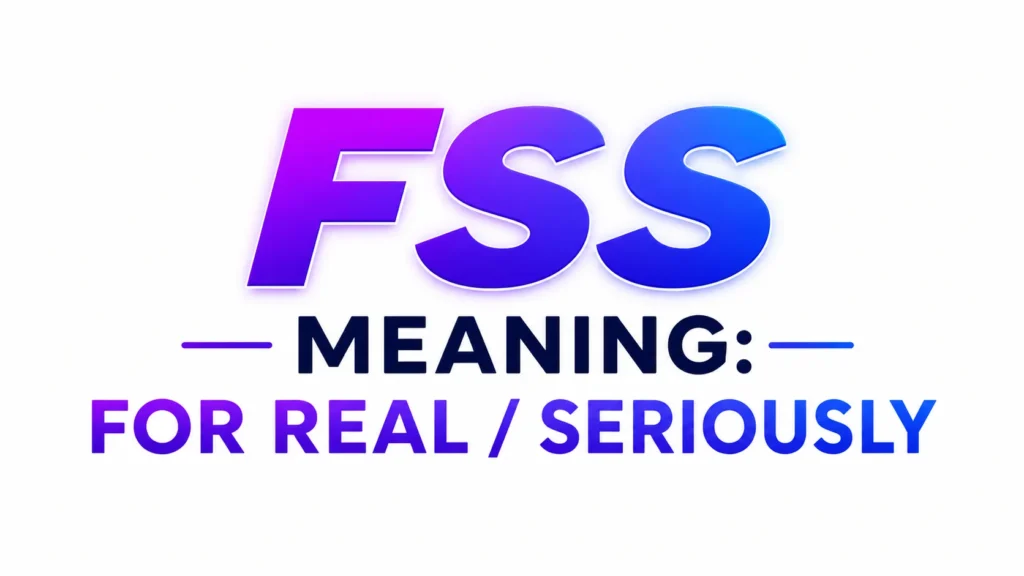
In most modern texting situations, “fss” is used as an informal way of saying “for sure.” It adds emphasis, agreement, or strong confirmation in a casual tone.
Still, its usage is not always identical everywhere. Depending on who is texting, it can slightly shift in tone or intensity. That’s why understanding it in real conversations matters more than memorizing a single definition.
FSS Meaning – Quick Meaning
At its core, fss meaning in text slang refers to “for sure.”
It is used to show:
- Strong agreement
- Confidence in a statement
- Casual confirmation
- Emotional emphasis in replies
Simple examples:
- “You coming tonight?”
“fss, I’ll be there” - “That movie was good.”
“fss, it was amazing” - “You ready for the test?”
“fss, I studied already”
In short, it acts like a quick emotional stamp of agreement.
Origin & Background
The rise of fss is closely tied to the evolution of internet slang. As texting became faster and more informal, people began shortening common phrases like “for sure” into “fs” or variations like “fss.”
The extra “s” often appears for emphasis or style. In digital communication, repeating letters is a common way to add tone—similar to how people write “yesss” or “nooo.”
Cultural influence
- Snapchat streak culture encouraged fast replies
- Instagram DMs normalized shorthand expressions
- TikTok comment sections made slang even more compact
Over time, “fss” became part of this ecosystem, especially among Gen Z users who prefer expressive micro-texting.
Evolution of meaning
Originally, it was just shorthand. Now, it carries tone:
- Neutral agreement → “fs”
- Strong agreement → “fss”
- Emotional hype → “fsss”
This subtle difference is what makes it feel more expressive than plain words.
Real-Life Conversations (MANDATORY)
WhatsApp Conversation
Ayesha: Are we still meeting after school?
Sara: fss, don’t even think I’m missing it 😭
Ayesha: Same, I’ve been waiting all week
Instagram DMs
Ali: That new café looks expensive
Zain: fss but the vibe is worth it
Ali: True, let’s try it this weekend
TikTok Comments
User1: This dance is harder than it looks
User2: fss I tried and failed like 10 times 💀
User3: Same, my legs gave up instantly
Text Message
Brother: You finished homework?
Sister: fss already done
Brother: Send help then 😂
These conversations show how naturally the term blends into casual communication.
Emotional & Psychological Meaning
Language in texting is not just about words. It reflects emotion, identity, and social connection. fss carries a tone of confidence and belonging.
People use it because:
- It feels quick and effortless
- It signals agreement without formality
- It creates a relaxed social tone
- It fits fast-paced digital interaction
Psychologically, it also shows comfort with the other person. You rarely use such slang with someone you are formal with.
Personal-style scenario
Imagine two close friends planning a weekend outing. One suggests going out despite tired schedules. The reply “fss” is not just agreement—it signals trust, shared energy, and readiness without overthinking.
That single response replaces a full sentence while still carrying emotion.
Usage in Different Contexts
Social Media
On platforms like TikTok and Instagram:
- Used in comments
- Reacting to relatable content
- Agreeing with opinions
Example:
“This is exactly how Mondays feel” → “fss 😭”
Friends & Relationships
Among friends:
- Expresses casual agreement
- Builds informal bonding
- Adds emotional tone
Example:
“You always overthink things” → “fss I really do”
Work / Professional Settings
Generally avoided in professional communication. It may appear unprofessional or unclear.
Better alternatives:
- “Absolutely”
- “Yes, I agree”
- “Definitely”
Casual vs Serious Tone
- Casual: “fss let’s go”
- Serious: Not recommended
- Emotional: “fss I understand you”
When NOT to Use It
Even though it is common in texting, there are situations where it should be avoided:
- Formal emails
- Academic writing
- Job interviews or workplace chats
- Conversations with authority figures
- Cross-cultural communication where slang may confuse
It can also be misunderstood by people unfamiliar with internet slang, leading to confusion or misinterpretation.
Common Misunderstandings
Many people misread fss because context matters heavily.
Misunderstanding 1: Thinking it has one fixed meaning
It usually means “for sure,” but tone changes depending on usage.
Misunderstanding 2: Confusing it with similar abbreviations
People often mix it with:
- fs
- ffs
- fsss
Each carries a different emotional weight.
Misunderstanding 3: Taking it literally
It is not a formal acronym. It is expressive slang.
Comparison Table
| Expression | Meaning | Tone | Usage |
|---|---|---|---|
| fss | for sure (emphatic) | casual, strong | texting, social media |
| fs | for sure | neutral | general agreement |
| yes | agreement | neutral/formal | all settings |
| absolutely | strong agreement | formal | professional use |
| no doubt | confidence | semi-formal | emphasis |
Key Insight:
The difference between these expressions is not just meaning but emotional intensity. “fss” sits in the most casual and expressive part of digital communication.
Variations / Types
1. fs
Simple “for sure” abbreviation
2. fss
Emphasized agreement
3. fsss
Highly emotional or excited agreement
4. fs fs
Reinforced confirmation
5. for sure
Full version, neutral tone
6. 100%
Strong agreement in numeric form
7. bet
Urban slang for agreement or confirmation
8. yup
Casual yes
9. definitely
Clear agreement with confidence
10. no cap
Slang meaning “honestly” or “truthfully”
How to Respond When Someone Uses It
Casual replies
- “Bet 😎”
- “Same here”
- “Facts”
Funny replies
- “fss? That sounded too confident 😂”
- “Okay Mr. Confidence”
- “Alright I believe you now”
Mature replies
- “I agree with that”
- “That makes sense”
- “Understood”
Respectful replies
- “Yes, I think so too”
- “Absolutely agreed”
- “That’s a fair point”
Regional & Cultural Usage
Western culture
Widely used in Gen Z texting culture, especially on Snapchat and TikTok.
Asian culture
Adopted in urban youth communication, often mixed with local languages in chats.
Middle Eastern culture
Used mainly in English-speaking online communities.
Global internet usage
Understood across platforms, but not always universally recognized.
Generational differences
- Gen Z: Frequent and natural usage
- Millennials: Understand but use less often
- Older generations: Often confused or unfamiliar
Is It Safe for Kids?
Yes, in general usage, fss as “for sure” is safe for kids in casual communication.
However, parental awareness is important because:
- Kids may misuse slang in formal settings
- Meaning can vary across platforms
- Context misunderstanding may occur
Overall, it is a harmless internet abbreviation when used appropriately.
FAQs
What does fss mean in texting?
It usually means “for sure” used for strong agreement.
Is fss the same as fs?
Yes, but “fss” adds more emphasis.
Can I use fss in formal messages?
No, it is best for casual conversations only.
Why do people add extra letters like “fss”?
To show emotion or stronger emphasis.
Is fss positive or negative?
It is generally positive or neutral depending on context.
Where is fss commonly used?
On Snapchat, Instagram, TikTok, and texting apps.
Does fss have multiple meanings?
Yes, but “for sure” is the most common.
Conclusion
Internet slang continues to evolve, and fss is a small but expressive part of that change. It captures agreement, confidence, and casual emotion in just three letters.
Understanding it helps you read digital conversations more naturally and respond in a way that fits the tone of modern communication.
Used correctly, it makes chats feel more connected and effortless. Like many slang terms, its power lies not in formality but in how naturally it fits everyday digital expression.