If you have received a message saying “I’m WFH today” or noticed someone using WFH in a chat, you may have wondered what it actually means. This abbreviation appears frequently in text messages, workplace conversations, social media posts, and online communities.
Many people encounter WFH for the first time when talking with coworkers, clients, friends, or family members. The phrase seems simple, yet confusion can arise because not everyone is familiar with workplace abbreviations.
Understanding WFH helps you communicate more effectively, especially in a world where remote work has become a normal part of daily life. This guide explains its meaning, origin, practical use, emotional context, and how people use it across different cultures and generations.
WFH – Quick Meaning
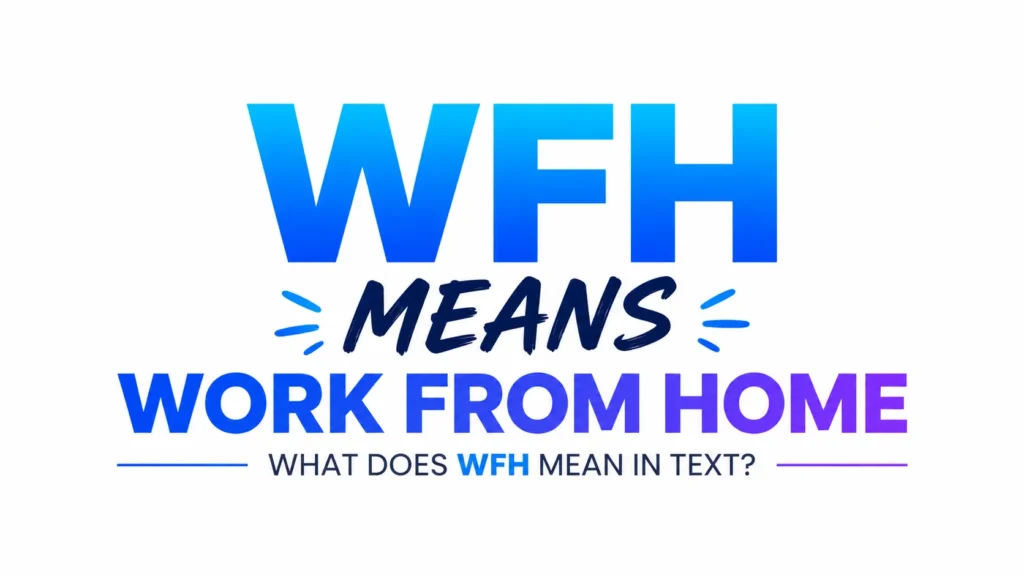
WFH stands for “Work From Home.”
People use it to tell others they are working remotely instead of going to a physical office.
Quick Facts
- WFH = Work From Home
- Common in texts, emails, and workplace chats
- Usually refers to remote work arrangements
- Widely used across professional and casual conversations
Examples
“I’m WFH today because the weather is bad.”
“Sorry for the late reply, I’m WFH and juggling meetings.”
“Are you in the office or WFH this week?”
Origin & Background
WFH became popular long before remote work became mainstream. Many companies offered occasional work-from-home opportunities, especially in technology, consulting, and freelance industries.
The abbreviation gained significant visibility during the global shift toward remote work in the early 2020s. Employees, managers, and organizations needed a quick way to communicate their work location.
Digital communication platforms accelerated its adoption. Workplace tools, messaging apps, and social networks helped spread the abbreviation across industries and countries.
Over time, WFH evolved from a corporate shorthand into a widely recognized expression. Today, even students, freelancers, entrepreneurs, and content creators understand its meaning.
Social media also played a role. Users often share their home office setups, daily routines, and productivity tips using hashtags related to working from home.
Real-Life Conversations
WhatsApp Conversation
Andrew:
Hey, are you coming into the office today?
David:
No, I’m WFH today.
Andrew:
Nice. Hope you get a quieter day.
David:
Hopefully. Fewer interruptions at home.
Instagram DM
Sarah:
Your desk setup looks amazing.
Emma:
Thanks! I’m WFH most of the week now.
Sarah:
That explains the monitor upgrade.
Emma:
Best investment I’ve made lately.
TikTok Comments
Ryan:
How do you stay productive at home?
Jessica:
WFH took some adjustment, but creating a routine helped.
Ryan:
Makes sense. I struggle with distractions.
Jessica:
A dedicated workspace changed everything for me.
Text Message
Michael:
Want to grab lunch?
Chris:
Can’t today. WFH and packed with meetings.
Michael:
No worries. Maybe tomorrow.
Chris:
Sounds good.
Emotional & Psychological Meaning
On the surface, WFH simply describes a work location.
Underneath, it often carries emotional meaning.
For some people, it represents flexibility, comfort, and better work-life balance. Others associate it with independence and greater control over their schedules.
At times, WFH can also imply challenges. Remote workers may experience isolation, distractions, or difficulty separating professional and personal life.
When someone says they are WFH, they may be communicating more than a location. They could be signaling availability, workload, or a need for understanding.
For example, imagine a parent working from home while caring for children during school holidays. A simple “I’m WFH today” may quietly communicate that their day involves balancing multiple responsibilities.
This illustrates how modern communication often packs significant context into a short abbreviation.
Usage in Different Contexts
Social Media
People use WFH when discussing productivity, remote work routines, home offices, or lifestyle changes.
Example:
“Another productive WFH day.”
Friends & Relationships
Friends may use WFH to explain their schedule or availability.
Example:
“I can chat later. WFH and finishing a project.”
Work and Professional Settings
This is where WFH appears most frequently.
Examples:
- “I’ll be WFH on Friday.”
- “The team is WFH this week.”
- “Please schedule the meeting since I’m WFH tomorrow.”
Casual vs Serious Tone
WFH is generally neutral.
In casual conversations, it simply describes a work arrangement.
In professional communication, it serves as a practical status update.
The meaning usually remains consistent regardless of tone.
When NOT to Use It
Although widely understood, WFH is not suitable everywhere.
Formal Documents
Official reports and legal documents often require the full phrase “Work From Home.”
International Audiences
Some people may not recognize the abbreviation.
Important Client Communication
Using the complete term can improve clarity.
Situations Requiring Precision
Certain industries prefer detailed descriptions rather than abbreviations.
Conversations With Non-English Speakers
WFH may create unnecessary confusion.
Common Misunderstandings
Assuming It Means Not Working
Some people mistakenly believe WFH implies a day off.
In reality, the person is usually working normal hours.
Thinking It Is Temporary
WFH can refer to one day, several weeks, or a permanent arrangement.
Confusing It With Freelancing
Someone can work from home while still being a full-time employee.
Misreading Availability
Being WFH does not automatically mean someone is free to chat or meet.
They may be in meetings or focused on work.
Comparison Table
| Expression | Meaning | Typical Use |
|---|---|---|
| WFH | Work From Home | Remote work |
| WFO | Work From Office | Office attendance |
| Remote Work | Working outside a central office | Professional settings |
| Hybrid Work | Combination of office and home work | Workplace policies |
| OOO | Out of Office | Unavailable for work |
| On-Site | Working at a physical location | Professional communication |
| Flexible Work | Adjustable work arrangements | HR and business discussions |
Key Insight
WFH is not about working less. It simply indicates where work is being performed. The abbreviation reflects a shift in how modern professionals balance productivity, flexibility, and communication.
Variations and Types
1. WFO
Work From Office.
2. WFA
Work From Anywhere.
3. Remote Work
Working outside a traditional office.
4. Hybrid Work
Mix of home and office work.
5. Telecommuting
Working remotely using technology.
6. Virtual Work
Work performed through digital platforms.
7. Home Office
A dedicated workspace at home.
8. Distributed Team
Team members working from different locations.
9. Flexible Work
Adaptable schedules and locations.
10. Remote-First
Organizations designed primarily around remote work.
How to Respond When Someone Uses It
Casual Replies
- “Nice, enjoy the comfort.”
- “Sounds like a productive day.”
- “Good luck with your meetings.”
Funny Replies
- “Living the pajama-office dream.”
- “Hope the coffee machine is close by.”
- “Office commute: five steps?”
Mature Replies
- “Hope your workday goes smoothly.”
- “Let me know if you need anything.”
- “Wishing you a productive day.”
Respectful Replies
- “Thank you for the update.”
- “I’ll keep that in mind.”
- “Feel free to reach out if needed.”
Regional & Cultural Usage
Western Culture
WFH is extremely common and widely understood. Many organizations use it daily.
Asian Culture
The term is increasingly recognized, particularly in urban and technology-focused workplaces.
Middle Eastern Culture
WFH usage continues to grow as remote work opportunities expand across industries.
Global Internet Usage
Online communities have made WFH a nearly universal abbreviation among English-speaking users.
Gen Z vs Millennials
Gen Z often uses WFH naturally in digital conversations and social media content.
Millennials commonly use it in professional communication and workplace discussions.
Both generations generally understand the abbreviation without explanation.
Is It Safe for Kids?
Yes.
WFH is a safe and neutral abbreviation that simply means “Work From Home.”
Parents, teachers, and children may encounter it during discussions about remote work, family schedules, or educational activities. The phrase contains no inappropriate language or harmful meaning.
FAQs
What does WFH mean in texting?
WFH means “Work From Home.” It indicates that someone is working remotely rather than from an office.
Is WFH only used at work?
No. People also use it in personal messages when explaining their schedule or availability.
Does WFH mean someone is free?
Not necessarily. A person working from home may still be busy with meetings and deadlines.
Is WFH professional language?
Yes. It is widely accepted in workplace communication.
What is the opposite of WFH?
The most common opposite term is WFO, meaning “Work From Office.”
Can students use WFH?
Students may use it when discussing parents, internships, or remote work situations.
Is WFH recognized worldwide?
It is broadly understood in many English-speaking and international professional environments.
Conclusion
WFH stands for “Work From Home,” a simple abbreviation that has become an important part of modern communication. What began as workplace shorthand has evolved into a globally recognized expression reflecting changing work habits and digital lifestyles.
Whether you encounter it in a text message, social media post, email, or team chat, understanding WFH helps you interpret conversations accurately. The term communicates location, availability, and sometimes even aspects of a person’s daily routine.
As remote and hybrid work continue shaping professional culture, WFH remains one of the most useful abbreviations to know. Once you understand its meaning and context, you’ll be able to use it naturally and confidently in everyday communication.